What Do We Call You? On “Revert,” “Convert,” and When a Label Outlives Its Welcome
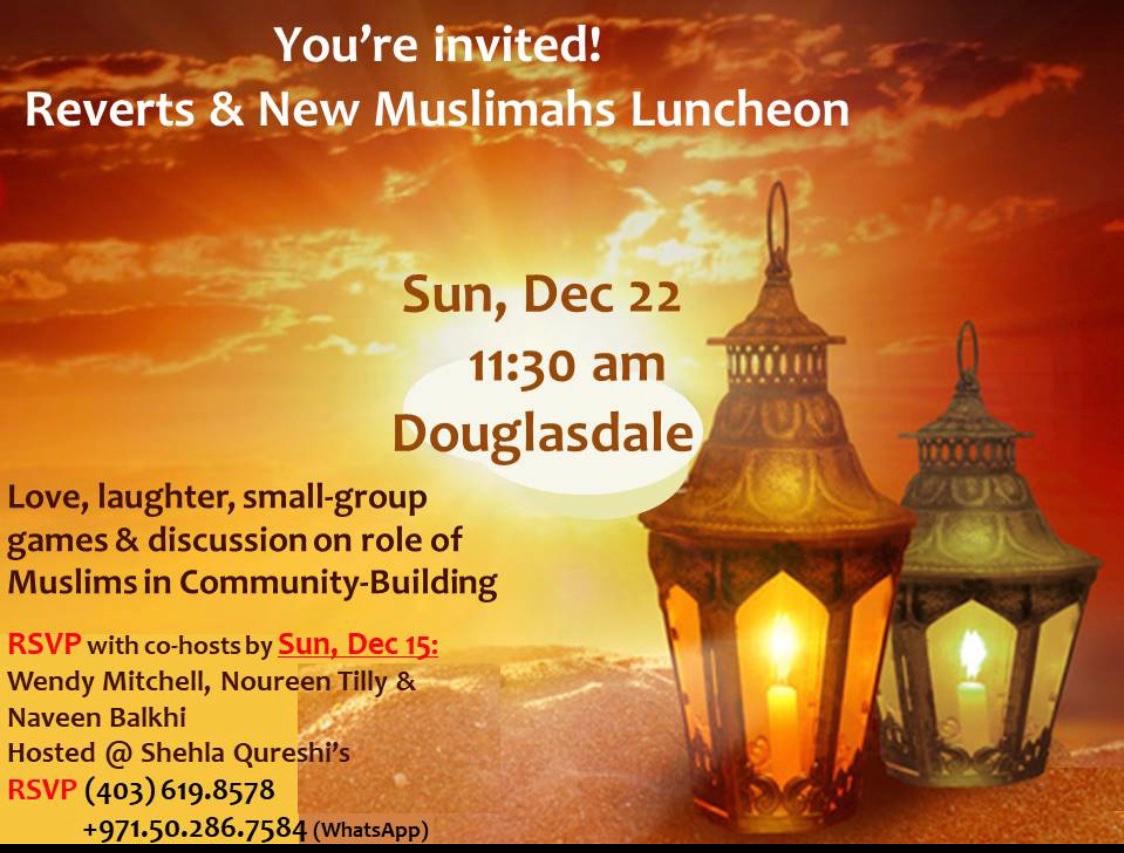
Tajdīd Al-Iman Calgary — Community Reflection
What Do We Call You?
On the words “revert” and “convert,” what they carry, and when a label outlives its welcome.
Community • Language • Belonging
When someone takes their shahada in a Muslim community in the West, they are almost immediately handed a label along with their new faith: revert. It is offered warmly, with genuine theological intention. The idea behind it is beautiful — that every human being is born on the fitra, the innate disposition toward tawhid, and that embracing Islam is not a departure into something foreign but a return to one’s own original nature. The word is meant to honor that.
But there is a problem. And it is a problem worth naming honestly, because the communities that care most about welcoming new Muslims are precisely the ones who should hear it.
The Word Doesn’t Work in English
In standard English, to revert means to go back to something worse. A wound reverts. A habit reverts. A civilization reverts. The word carries an unmistakable weight of regression, of returning to a more primitive or undesirable state. When a non-Muslim hears that their neighbor has “reverted” to Islam, the word does not communicate spiritual return — it communicates a step backward.
This means the word fails at its most basic communicative task. Every time it is used in a general English context, it requires an explanation to work. And a word that has to be explained before it can mean what you intend it to mean is, at minimum, the wrong word.
A note on the Arabic: The situation is even more striking when we consider translation. The closest Arabic verb to “revert” — irtadda (ارتدّ) — is the root of murtadd, meaning one who has left Islam. It is the term for apostasy. The direct Arabic translation of what Western Muslim communities mean by “revert” produces, in Arabic, the exact opposite meaning. This reveals something important: revert is not a translation of an Islamic concept. It is an informal English-language invention, without grounding in Arabic tradition or in natural English usage. It stands on no firm foundation in either language.
The concept it tries to express — that we are all born in a state of natural submission, and that embracing Islam is a return to that state — is real, profound, and well-established in Islamic theology. That concept lives beautifully in words like fitra, hidaya, and istislam. It does not need to be carried by a broken English word. The theology is in the idea, not in the label.
The Label That Never Expires
But perhaps the deeper issue is not which word we use. It is how long we keep using it.
Consider how other transitions work. A person who becomes a doctor is not introduced as a “new doctor” for the rest of their career. A person who immigrates and earns citizenship is not called a “new Canadian” at their grandchildren’s wedding. At some point, the transition is simply complete. The label served its purpose and was quietly retired.
In Muslim communities in the West, this retirement rarely happens. People who have been Muslim for twenty or thirty years are still introduced as “our brother — he’s a revert.” The origin story, which belongs to them, becomes a permanent annotation applied by others.
This creates, almost without anyone intending it, a two-tier community: born Muslims on one side, and Muslims-with-an-asterisk on the other. The convert is welcomed, embraced, celebrated — and then quietly kept in a category of permanent newcomer. They become, in a sense, forever children in the community, no matter how much they grow.
The harm in this is subtle but real. It can make it harder for experienced Muslim converts to take on leadership, teaching, or authority roles — as though their origin disqualifies them from full standing. It can sustain a quiet, unspoken assumption that Arab or South Asian heritage makes someone more naturally Muslim, as though Islam belongs more to certain ethnicities than to the ummah as a whole. And it can create a kind of imposter syndrome that never fully resolves, no matter how deep the person’s knowledge or how sincere their practice.
Ironically, many who have chosen Islam as adults bring to it a depth of intentionality that is genuinely rare. They studied before they committed. They paid a social cost — sometimes a heavy one — for their faith. They chose it with their eyes open. The permanent label ends up obscuring that rather than honoring it.
When Should the Label Be Shed?
A reasonable and humane threshold is somewhere between three and five years. By that point, a person has typically completed multiple Ramadans, navigated significant life decisions through an Islamic framework on their own terms, worked through the initial theological questions that come with early faith, and — perhaps most tellingly — encountered the ordinary difficulty of being Muslim and chosen to remain. The novelty has worn off. The commitment is real.
Three to five years also maps onto how many communities intuitively think about integration in other contexts. It is long enough to be meaningful, short enough to not become a life sentence.
But the more important principle is this: the person themselves should have authority over when they’ve shed the label. Some people come to Islam with prior knowledge, established practice, or deep community connections, and they are functionally peers within a year. Others may want to carry the identity longer because it is meaningful to them. That is entirely their right. The community’s role is to follow their lead — not to pin the label on indefinitely, and not to strip it away prematurely either.
What is not acceptable is the current default, where the label is permanent and applied by others regardless of the person’s wishes, growth, or standing in the community.
What We Might Do Instead
None of this requires abandoning the theology of fitra. That concept is precious and should be taught, discussed, and celebrated. What it requires is separating the concept from a word that doesn’t serve it well.
New Muslim is simple, warm, accurate, and universally understood. It signals someone who may benefit from community support and mentorship without implying regression or permanent junior status. Convert is honest and carries no negative theological freight — it simply describes what occurred.
More practically, communities can make a quiet commitment: after a few years, stop leading with it. Let the person’s name stand on its own. Introduce them for what they contribute, not for where they started. If their journey is relevant to share, let them share it, in their own words, in their own time.
A Muslim is a Muslim. The origin story is theirs. The community’s gift to them — after the warmth of welcome has done its work — is to simply let them belong.
✦ ✦ ✦
This reflection was written for the Tajdīd Al-Iman & Becoming Muslim community in Calgary. We welcome responses, reflections, and respectful disagreement.

 Tajdid Al-Iman & Becoming Muslim.com